

42% of 2007 Cases Remain StayedPatent reexamination parallel to a district court/ITC litigation is often initiated in an attempt to stay the more cost prohibitive court proceeding. Court’s will stay the ongoing litigation pending the patent reexamination outcome in the interests of judicial economy.But, what happens to these cases? Are they ultimately dismissed altogether? Do the majority of these cases resume? Do the answers to these questions vary based upon the type of patent reexamination request?In 2007, 81 cases were stayed pending patent reexamination. Looking at the status of these cases today, long term results demonstrate a significant advantage for defendants. As shown in the chart below, the combined results of 2007 cases stayed for both ex parte and inter partes reexamination requests is illustrated. (click to enlarge)As shown above, only 35% of cases were reopened after the initial stay. This indicates that as much as 65% of stays yield a favorable result for the defendant (i.e., remain stayed/dismissed). While it is possible that some cases were dismissed upon favorable settlement to the defendant, such does not appear to be the case.In those cases involving only ex parte patent reexamination (below) 46% of cases are reopened (a negative result for defendants), with 54% of cases ending favorably to a defendant.(Click to enlarge)Interestingly, those defendants seeking inter partes patent reexamination fared much better than those seeking ex parte patent reexamination.In those cases involving only inter partes patent reexamination, or both inter partes reexamination and ex parte reexamination, (below) only 18% of cases have been reopened, with a staggering 50% of cases still stayed. Adding together the 32% of cases that have been dismissed, indicates up to an 82% favorable result for such defendants.A common complaint of Patentees facing a motion to stay pending inter partes patent reexamination is that granting of such a motion effectively suspends the case for years on end. In view of the 2007 results, it seems likely that argument will proliferate as defendants embrace inter partes filings in increasingly greater numbe
Patent reexamination parallel to a district court/ITC litigation is often initiated in an attempt to stay the more cost prohibitive court proceeding. Court’s will stay the ongoing litigation pending the patent reexamination outcome in the interests of judicial economy.
But, what happens to these cases? Are they ultimately dismissed altogether? Do the majority of these cases resume? Do the answers to these questions vary based upon the type of patent reexamination request?
In 2007, 81 cases were stayed pending patent reexamination. Looking at the status of these cases today, long term results demonstrate a significant advantage for defendants.
As shown in the chart below, the combined results of 2007 cases stayed for both ex parte and inter partes reexamination requests is illustrated. (click to enlarge)

As shown above, only 35% of cases were reopened after the initial stay. This indicates that as much as 65% of stays yield a favorable result for the defendant (i.e., remain stayed/dismissed). While it is possible that some cases were dismissed upon favorable settlement to the defendant, such does not appear to be the case.
In those cases involving only ex parte patent reexamination (below) 46% of cases are reopened (a negative result for defendants), with 54% of cases ending favorably to a defendant.

(Click to enlarge)
Interestingly, those defendants seeking inter partes patent reexamination fared much better than those seeking ex parte patent reexamination.
In those cases involving only inter partes patent reexamination, or both inter partes reexamination and ex parte reexamination, (below) only 18% of cases have been reopened, with a staggering 50% of cases still stayed. Adding together the 32% of cases that have been dismissed, indicates up to an 82% favorable result for such defendants.
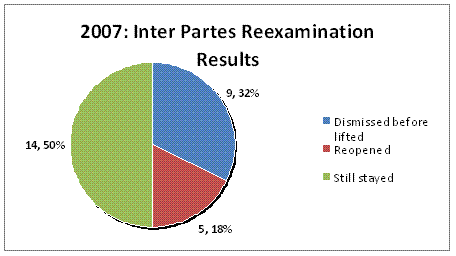
A common complaint of Patentees facing a motion to stay pending inter partes patent reexamination is that granting of such a motion effectively suspends the case for years on end. In view of the 2007 results, it seems likely that argument will proliferate as defendants embrace inter partes filings in increasingly greater numbers.